bcpublishers@gmail.com

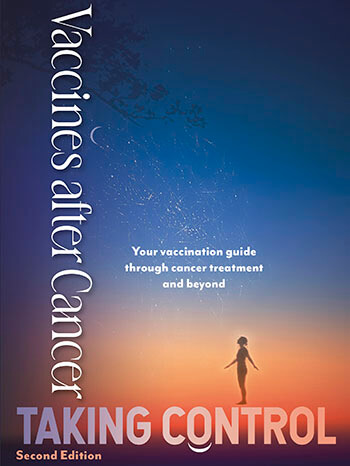
Vaccines after Cancer: Taking Control (2nd Edition) by John Boyages (Author)
Yes, John. To match the Lymphoedema page exactly:
* **About** should use coral, uppercase, bold **Mohave**
* **Learn** should use the normal blue `book-content h2` styling
Use this complete Vaccines section:
“`html
About
All you need to know about vaccinations after a cancer diagnosis
Australia Day 2017, when I was recognised with an Order of Australia, was a bittersweet moment. The day before, I had received my first dose of chemotherapy for Hodgkin lymphoma. After eight months away from work, I too became a “cancer survivor”.
During my own cancer journey, vaccination was never discussed with me. I later realised that many people diagnosed with cancer receive little or no guidance about vaccines—before treatment starts, during therapy or in the years that follow.
In 2020, a conversation with my nephew, a general practitioner, highlighted just how important vaccination is after cancer treatment. That prompted me to begin researching vaccines in depth, both for myself and for my patients.
This fully updated second edition provides clear, practical guidance on vaccination before, during and long after cancer treatment, helping you protect your health with confidence.
Learn
- Which vaccines to consider before, during and after cancer treatment
- Which vaccines should be avoided or delayed during certain cancer treatments
- How cancer and its treatments affect your immune system
- How vaccination reduces your risk of serious infections
- What to expect after vaccination, including common side effects
- What you need to know about vaccines for shingles, pneumonia, whooping cough, influenza and COVID-19
- How often vaccinations and boosters may be needed in the years after treatment
“`
This will synchronise the typography with the Lymphoedema page without adding more CSS.
Reviews
John Boyages has written a must-read book for patients with cancer wanting the latest advice about vaccinations before and after treatment. His book Cancer and Vaccination: Taking Control is easy to read, yet contains well-researched information about COVID-19, influenza, shingles and other vaccines. This is an excellent resource not only for patients and their families, but also for general
practitioners, nurses and oncologists.
Professor Peter Collignon AM
Infectious Diseases Physician and Microbiologist, Canberra Hospital
Professor, Medical School. Australian National University.
Completing anti-cancer therapy is not the end, but rather a beginning. It marks the commencement of life as a cancer survivor, which is a privileged and fantastic position, but a situation whereby medical care is often more complex. Although preventative medical care post-cancer therapy is important, it is often not given the importance that it deserves. John Boyages has addressed this breach by writing a comprehensive and practical guide to vaccination post-cancer therapy. Vaccination is amongst the most effective tools in modern medicine and it is vitally important that this aspect of preventative medical care is not overlooked in cancer survivors. I commend this guide to cancer survivors, carers and health professionals alike.
Dr Ian Irving
Clinical Haematologist Icon Cancer Centre and Icon Group
Group Medical Director
In line with his other excellent books, John has done it again. Cancer and Vaccinations: Taking Control is an insightful, timely, well referenced, excellent review of the current vaccine-related issues facing our patients today. It is a clear, easy-to-read, practical guide to empowering patients and their carers to make appropriate, safe and evidence-based decisions. Well done. Thank you!
A/Prof Gavin Marx
Medical Oncologist, Northern Haematology Oncology Group,
Director SAN Clinical Trials Unit and Clinical Director SAN
Integrated Cancer Centre, Sydney Adventist Hospital
As someone who was very reluctant to be vaccinated, this book answered many of my questions and allayed many of my concerns. John has been my oncologist since I was diagnosed with breast
cancer ten years ago. During the intervening time I have felt empowered as he has listened to me and helped me to make informed choices that I faced in the medical treatment minefield. I know I can
trust the information John has given in this book as I continue to make choices regarding my health. If you can’t make an appointment to see him, reading this book this is the next best alternative.
Sue Hume